
The difference between your top performer and newest hire isn’t obvious talent. It may look like talent, but it really isn’t.
Picture this: a seasoned sales rep walks into an account with experience and good instincts. What happens? They pose a couple of questions about the production line, identify a bottleneck, and suggest the ideal solution. They close the deal before you know it.
Your new rep walks into the same account, talks about some of the product’s features, mentions a price, and hears back that they will “think about it.”
The difference isn’t flair; it’s the process. Your veteran has developed repeatable behaviors while your new rep hasn’t learned them yet – and that gap costs money and weakens sales rep performance.
The Anatomy of a Top Performer
When looking at best sales rep practices, we think we see the outcomes, but the behaviors are worth a closer look.
1. The top rep has a hypothesis
The key difference between your average rep and the best-performing rep in your organization is that the top rep has a hypothesis. Rather than showing up and asking what they can sell, the best in the business know why they are visiting and exactly what they want to accomplish. They know what the customer previously purchased, what they liked, and what they disliked. The sales representative knows about the promotions offered by the agent regarding the client account.
2. The newest rep relies on memory
The newest rep knows that they need to make a sale but has no hypothesis about how they intend to do that. They also rely on memory to recall what they discussed previously and what the customer might want to discuss now. A parts catalog with hundreds of thousands of SKUs is impossible to memorize. When the new rep faces a technical question they cannot answer, they retreat to the only lever they fully understand: price.
This is where sales rep performance diverges. The veteran sells on value because they have the knowledge to do so. The novice sells on price because they have nothing else.
How Experienced Reps Handle the Three Critical Moments
We need to take the veteran’s sales rep techniques and turn them into a process that the new rep can follow to improve their performance. There are three critical moments in the sales conversation that are handled differently by the new rep than by the veteran.
1. The Customer Conversation
The experienced rep prepares by reviewing what they previously discussed with the customer before arriving. If the customer prefers to purchase from a certain brand, the veteran knows it. If the customer is price-sensitive, the veteran knows it. They remind themselves of what they discussed in the last conversation.
Meanwhile, the newbie is not prepared. They do not know anything about the customer except what they remember from an (often vague) conversation that they had previously. This forces the customer to re-share information that the inexperienced rep should already know if they were prepared for the conversation.
The best sales reps will use their knowledge to make the customer feel understood by asking questions, such as, “Is the issue with the hydraulic system on Line 4 causing downtime?” That’s the kind of prep that will enhance the sales rep’s performance and make them more trustworthy.
2. Product Recommendations
Experienced reps know the catalog at a high level and can navigate to find the products that are appropriate for the customer’s specific needs. Instead of selling based on features, they recommend based on the problems they can solve. They have enough knowledge to say that even though the customer might require a lower-priced item, the higher-priced one is a better solution for their problems. This is where automotive sales performance suffers.
The novice rep tends to recommend products based on what is easier to sell or, worse, based on what is cheaper to help justify a lower-priced offer.
3. The Follow-Up
The veteran rep uses the follow-up as a chance to give a bit more info, so the sale can actually move forward. They might toss in an interesting case study, confirm delivery dates, or remind the customer about a pending promotional offer. They take notes on everything so they know the next time they speak with someone.
Meanwhile, the newbie just doesn’t follow up how it should be because they don’t really know what to do. They let the lead go kind of cold, thinking the buyer will call them back later when they feel ready to purchase. The best automotive and industrial reps know that follow-up is basically the right moment to keep the dialogue alive and strengthen the bond with the customer. They also lean on an automated CRM tool to stash notes, set reminders, and line up the next steps, without overthinking it. That discipline supports sales rep performance.
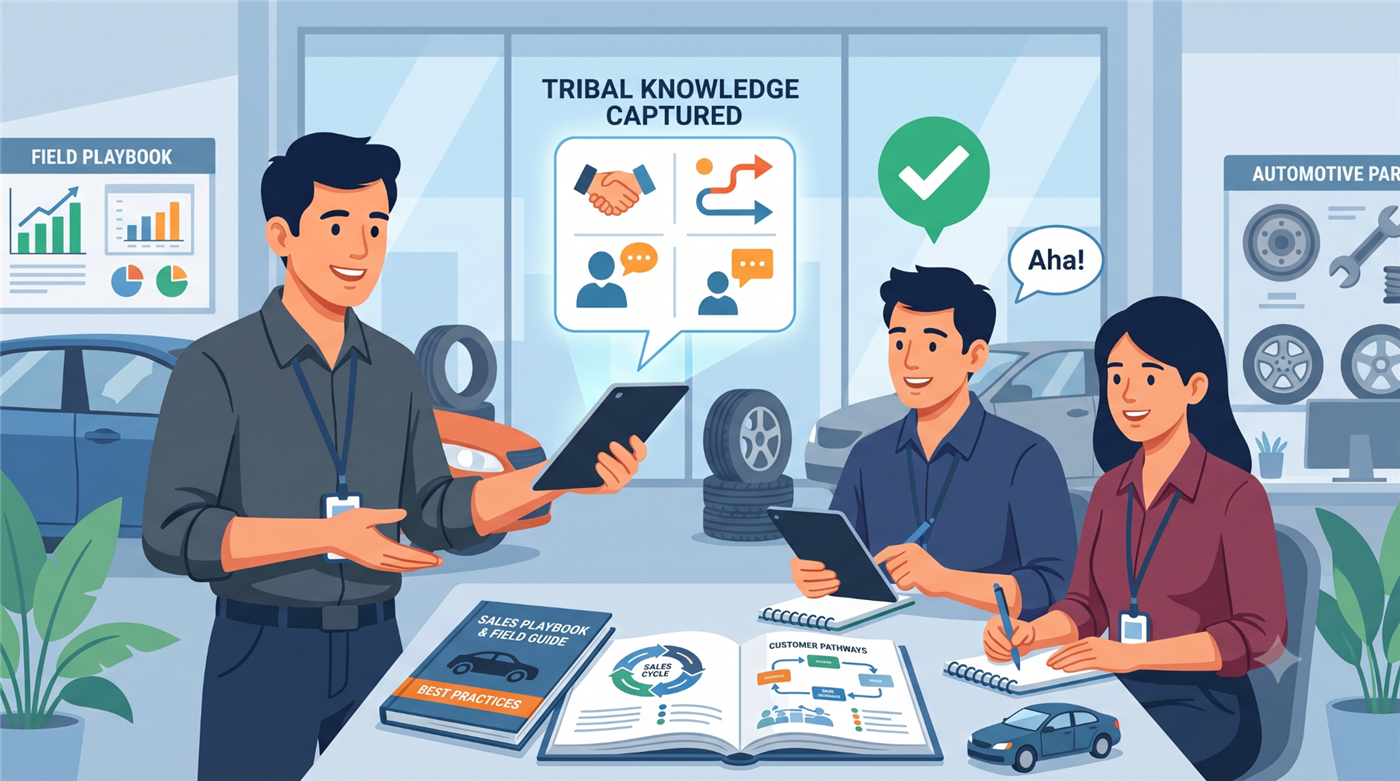
Capturing Tribal Knowledge Before It Walks Out the Door
The difference between what a veteran and new rep know is often referred to as “tribal knowledge.” It is the information that is not officially documented but is part of doing business anyway. It includes the things that Customer A hates and the things that Customer B looks for before purchasing.
Tribal knowledge is often lost if a top-performing rep leaves because it is “in their head.” To document this kind of information, the business must identify what the departing rep has learned about the territory, the customers, and the products and store it for the sake of the business. The information that is useful is what the rep learned about how to sell to the customer, such as what a customer will and will not buy based on the type of promotion.
Documenting this knowledge is a way to capture the rep’s expertise and keep it within the organization. When a rep learns that a specific promotion is being diluted by another distributor, that knowledge should be used and stored so that the business can continue to use that advantage as long as possible. The same goes for what the rep learned about how a new product works in a particular application. The more a rep knows about products, customers, and territory, the more they contribute to the bottom line. These habits are the foundation of best sales rep practices.
Turning Behaviors into a Field Playbook
You cannot simply instruct a new rep to “be like Bob.” What worked for Bob may not translate to how Jane conducts her business. To take the veteran’s behaviors and apply them to your rookie, you will need to turn those behaviors into a “field playbook.”
One of the most important aspects of turning behaviors into a playbook is knowing exactly what you want the new hires to do. The easiest way to ensure success is to give the rep the same information that the veteran used to prepare for the conversation.
Fortunately, technology can help. We can create a field playbook that lives in the system and helps the rep conduct the conversation that the veteran would have conducted. If the system can provide the right customer knowledge and price information at the right time, the rep will have the tools that the veteran has at their disposal and be as prepared as the best rep in the business. That preparation improves automotive sales performance and makes best sales rep practices easier to repeat. Finally, distribute this information to the reps who need it in a format they can consume easily.
About Our Sales Channel
iSteer Sales Channel accelerates sales and increases conversions and revenue. We believe that business success is created by the success of its sales channel. Empowering the sales team is essential in building the business. Our platform enables you to set goals and achieve them by providing specific experiences where vital expertise is required.
We enable sales teams to get ready for success by providing knowledge at their fingertips. Our coaching tools specialize in the “how,” not the “what,” providing information when it is needed the most. By encouraging effective communication and engagement in the market, we empower sales teams to utilize their areas of expertise.
Ready to elevate your business? Connect with us to get a personalized demo with one of our product experts. We will show you how iSteer AI solutions can be adapted to meet your specific needs, helping you to grow and develop your business.
FAQs
1. Why do new reps struggle compared with top performers?
New reps often rely on memory and general product knowledge. Top reps rely on preparation and customer history. That gap shapes everything from recommendations to pricing.
2. How do experienced reps handle customer conversations differently?
They continue the relationship instead of restarting it. They review account notes, ask specific application questions, and bring relevant context into the visit.
3. What causes discounting, and how do you reduce it?
Discounting often comes from a lack of product and pricing confidence. When reps have the right product information and customer-specific pricing, price stops being the only argument. This improves sales rep performance and protects margin.
4. How can a business capture tribal knowledge?
Record what reps learn about accounts, preferences, and promotions in a shared system. Then that knowledge stays with the business when a rep forgets or leaves. It becomes usable customer intelligence.
5. How does structured coaching improve results?
Structured coaching tracks feedback, follow-up, and progress. Managers can see whether a gap closed and what to work on next. Over time, this supports stronger best sales rep practices and better automotive sales performance.
Related posts
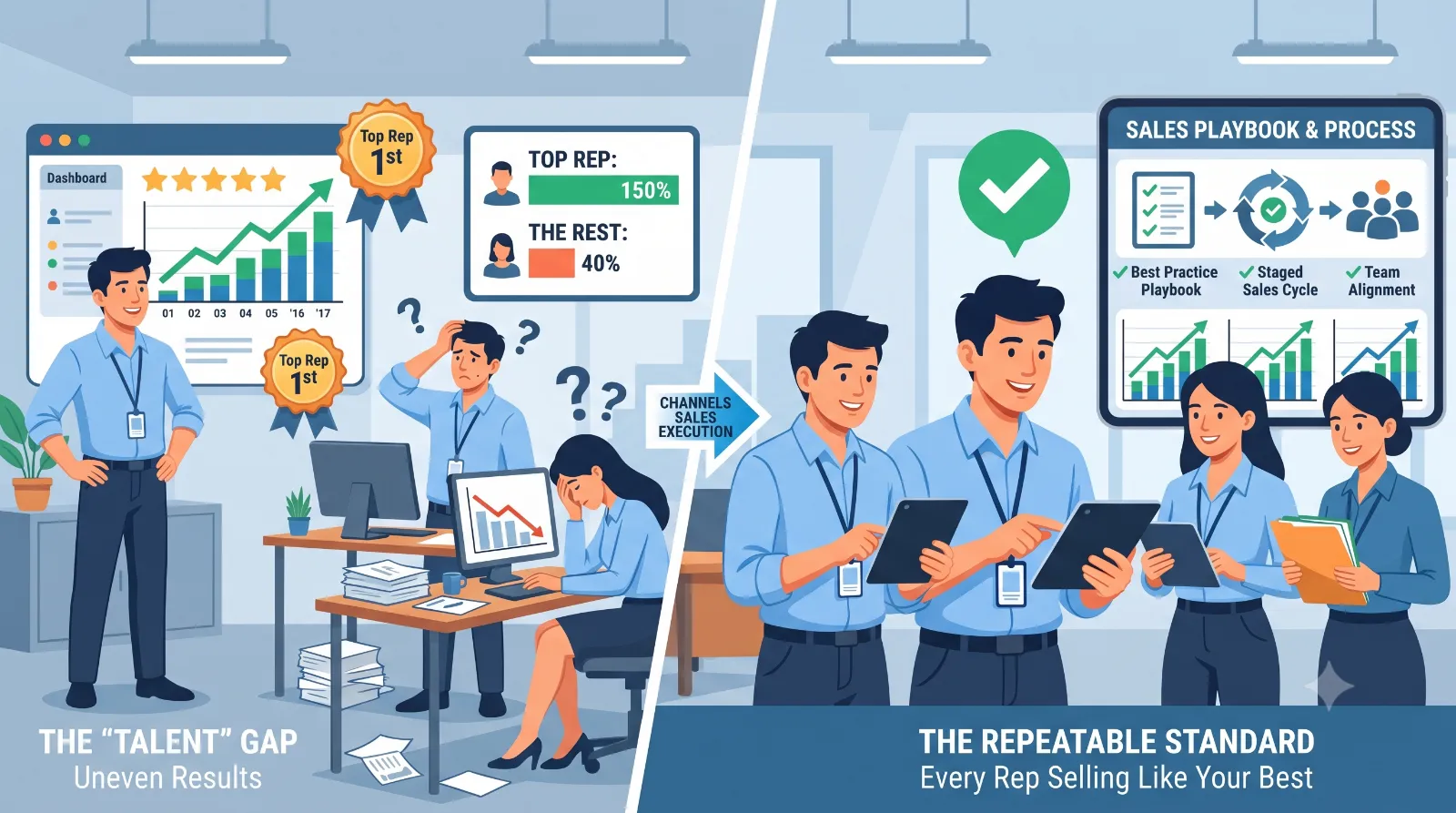
Can Every Rep Sell Like Your Best Rep?
The gap between your best rep and the rest often looks like a talent problem, but it’s usually a process gap. Channel Sales Execution turns your best rep’s way of selling into a repeatable standard for every rep.
Read more
Why Even Good Reps Discount, and What Actually Stops It
Discounting often starts as a knowledge gap, not a discipline problem. Give reps the right product, customer, and pricing context at the moment of the sale, and price stops being the safest answer.
Read more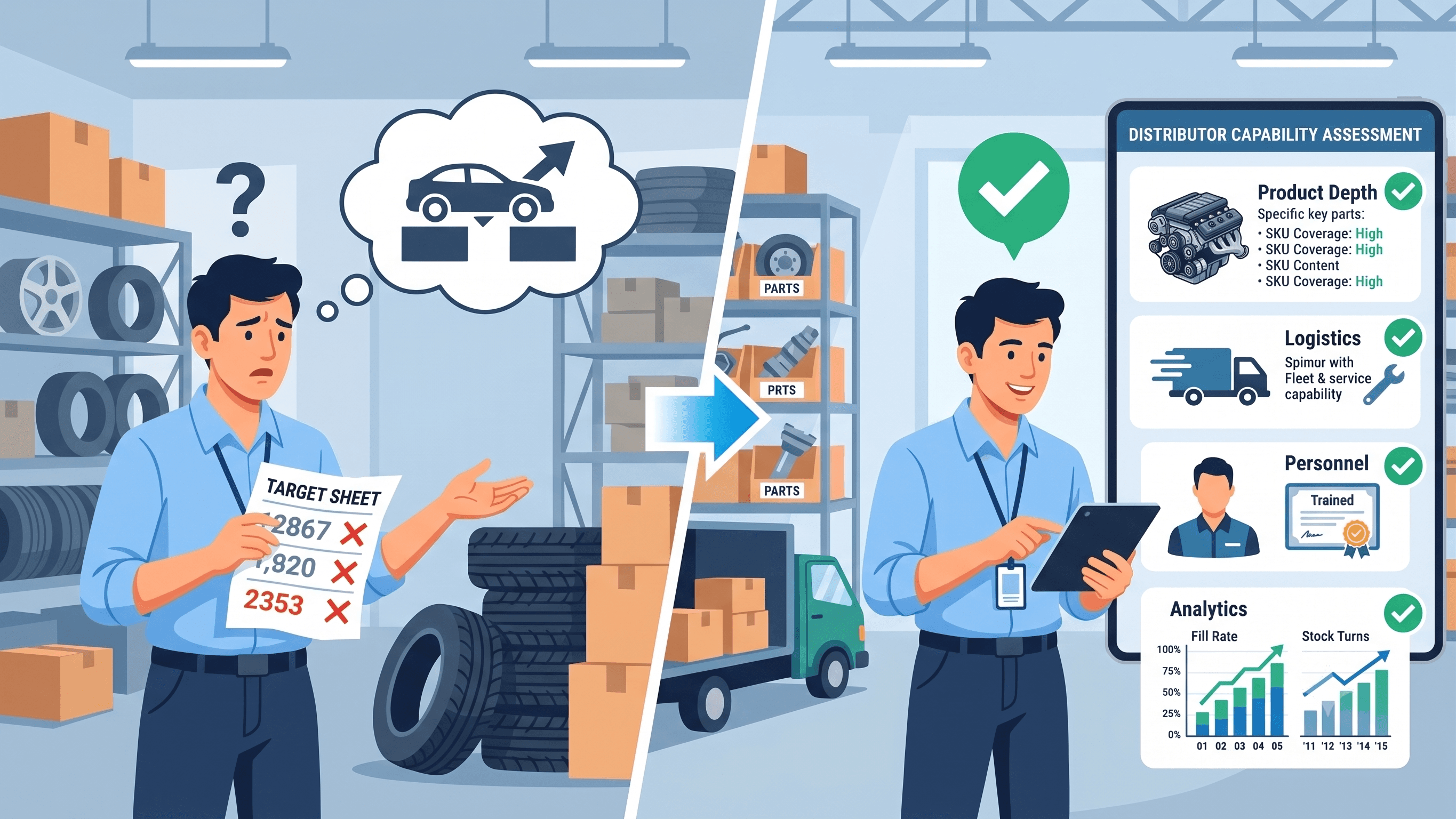
Why Automotive Aftermarket Leaders Are Rethinking Distributor Planning
Growth in the automotive aftermarket is constrained by distributor capability, not demand. Why leading manufacturers now start the planning cycle with a capability assessment instead of a target sheet.
Read moreSee how iSteer fits your sales and distribution channel.
Schedule a personalized demo with one of our product experts.