

A sales rep arrives ready to sell. Then the customer asks for a better price, and the rep gives one.
Why?
The easy answer is discipline. Set tighter discount rules. Review exceptions.
Those steps miss a basic field problem. A rep facing a large product range, incomplete customer history, and unclear promotions has fewer ways to sell on value. Price becomes the safest answer.
This is why discounting often starts as a knowledge gap.
Give the rep the right product, customer, and pricing context at the right moment, and the conversation changes. The rep has more reasons to recommend, cross-sell, and defend value.
The goal? Make every rep as good as your best rep.
Why Good Reps Still Reach for the Discount
A rep might know an account well and still miss:
- Which product fits the current need?
- What the customer bought last time?
- Which alternative fits the use case?
- Which promotion applies?
- What price should the customer receive?
- What did the customer discuss during the previous visit?
The customer asks for a lower price. The rep knows the product category, but lacks enough account or offer context. A discount feels easier than a detailed recommendation.
The discount is not always a sign of weak selling.
Sometimes, price is the clearest tool available.
Discounting Is Often a Knowledge Problem, Not a Motivation Problem
A distributor might carry thousands, or even hundreds of thousands, of SKUs. No field rep will remember every specification, alternative, price condition, and customer preference.
Consider a distributor selling industrial parts. A customer needs a specific component. The best rep knows the right part, a suitable alternative, the customer’s buying pattern, and the current promotion.
Another rep knows the product family, but lacks the same context. The customer asks for a lower price. The second rep has fewer options.
The difference is usable knowledge.
Instead of asking, “Why did the rep give away margin?” ask, “What information did the rep have at the moment of the sale?”
This question leads to a fix.
In the Shell deployment, iSteer reports an 18.24% annual sales increase and 2x pre-planned visits.
What the Best Reps Know That Others May Not
Personal memory does not scale.
If a strong rep leaves, part of the customer relationship leaves too. Even when the rep stays, useful details disappear between visits.
A stronger model captures customer knowledge in the business and puts useful context back into the rep’s hands.
For every visit, the rep should have access to:
- Relevant customer history
- Previous purchases and discussions
- Product recommendations
- Customer-specific pricing
- Active promotions
- Follow-up actions
- Earlier coaching points
What Actually Stops Unnecessary Discounting?
Telling reps to discount less is not enough. Give them better inputs first.
1. Put the right product knowledge in the rep’s hands
Large catalogs create a practical problem. Reps need help finding the right product without relying on memory.
The rep needs relevant products, alternatives, and customer fit quickly.
2. Give reps customer context before and during the visit
Customer intelligence should follow the account, not the person.
A useful system records what reps learn during visits and makes those details available later. Managers and other reps gain continuity. New reps start with more context.
3. Give them the correct pricing and promotions
Promotions often sit across multiple layers. A manufacturer might offer one promotion. A store group might add another. A store might apply a customer-specific condition.
The rep needs one clear answer:
Which price applies to this customer, for this product, right now?
When the correct price and promotion appear alongside customer and product context, guesswork drops. Promotions reach the customer as planned, and margin has a better chance of staying intact.
4. Turn the best rep’s process into a repeatable process
Top performers often prepare better before a visit. They ask sharper questions. They recommend with more context. They follow up consistently.
A repeatable process helps every rep:
- Prepare using customer history
- Identify the current need
- Recommend the right product
- Present relevant pricing and promotions
- Record the next action
The goal is to give every rep access to a sales process proven inside the business.
Where Coaching Fits
Managers often coach after ride-alongs or customer visits. The problem starts when feedback disappears after the conversation.
A manager says, “Ask more questions next time.”
Next time comes. Then the same feedback returns.
Structured coaching keeps a record. Managers should know:
- What did we discuss last time?
- What did the rep change?
- Did the gap close?
- What should happen next?
If a rep keeps reducing prices, the manager needs context. Was the product wrong? Was the pricing unclear? Did the rep miss a customer preference? Did the rep skip discovery?
Better coaching looks for the cause before judging the outcome.
A Simple View of the Problem
| Field Problem | Missing Input | Likely Result |
|---|---|---|
| Reps rely on memory | Customer history | Missed context |
| Large product catalogs | Product guidance | Price becomes the easier pitch |
| Layered promotions | Customer-specific pricing | Discount errors |
| Different selling habits | Repeatable process | Uneven rep performance |
| Feedback gets lost | Coaching records | The same gaps return |
The Bigger Issue is Consistency
Discounting is one visible symptom. The same knowledge gap affects the wider sales process.
- One rep prepares thoroughly. Another arrives with little context.
- One rep recommends a related product. Another waits for the customer to ask.
- One rep knows the correct promotion. Another offers a broader discount.
Move useful knowledge and proven sales practices from top performers into the daily workflow of everyone else.
This is where making every rep as good as your best rep becomes practical.
A Note for Brand Leaders
A brand might know what shipped to a distributor, yet have limited visibility into what the distributor sold, to whom, at what price, and at what rate.
For specialty chemicals, paints, and coatings, multi-brand distributors often resist brand-led systems.
A distributor is more likely to use a system when the system improves its own selling. Rep capability comes first. Secondary sales intelligence follows as the relationship grows.
What Does This Mean for Leaders?
If discounting keeps returning, start with the field conditions around the sale.
Ask four questions:
- Did the rep have enough product knowledge?
- Did the rep have recent customer context?
- Did the rep see the right price and promotion?
- Did the rep receive coaching tied to the previous visit?
If the answer is no, a discount policy alone will not solve the problem.
Your best reps already hold much of the knowledge your business needs. Make useful knowledge available to every rep at the moment of need.
iSteer Sales Channel
iSteer helps sales teams put the right product, customer knowledge, pricing, and coaching context into every field visit. Sales Channel brings these capabilities into one connected experience, helping reps sell with better preparation and giving managers a clearer basis for coaching.
The aim is simple: make every rep as good as your best rep.
Schedule a personalized demo with iSteer to see how Sales Channel supports better sales execution across your distribution network.
FAQs
1. Why do good sales reps still give discounts?
Even experienced reps discount when they lack clear product, customer, or pricing information. Without enough context, price becomes the easiest way to close the sale.
2. How does better product knowledge reduce discounting?
When reps know which product fits the customer’s need, they have more value to discuss. This gives them a stronger reason to sell beyond price.
3. What information should reps have before a customer visit?
Reps should have customer history, relevant products, previous discussions, current promotions, and customer-specific pricing in one place.
4. How does coaching help reduce unnecessary discounting?
Structured coaching helps managers track what went wrong, what the rep changed, and what needs work next. This turns feedback into an ongoing improvement process.
5. How does iSteer help reps sell without relying on discounts?
iSteer Sales Channel puts product knowledge, customer context, pricing, promotions, and coaching support into the field sales process, helping reps make better decisions during every visit.
Related posts
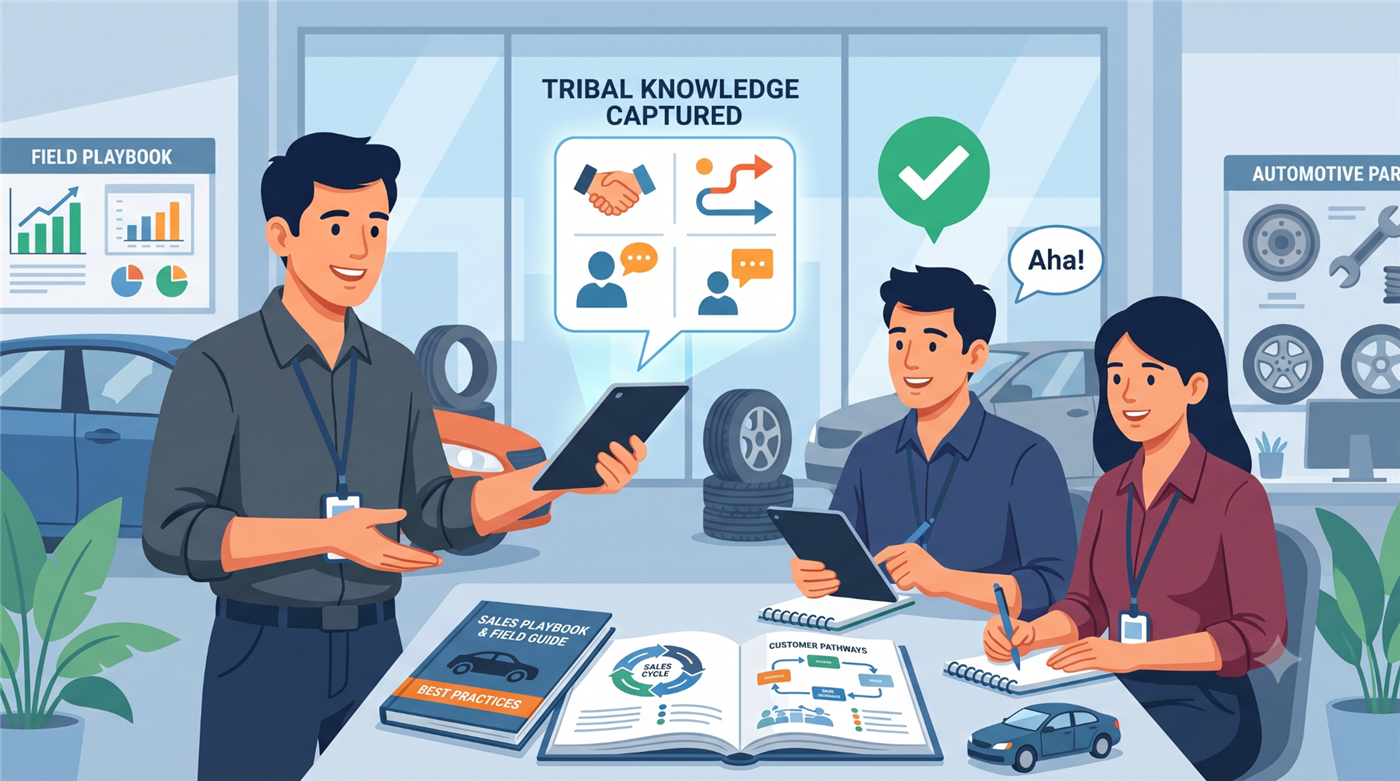
What Your Best Rep Does That the Newest One Hasn’t Learned Yet
Discover repeatable best sales rep practices that improve sales rep performance and automotive sales performance. Capture tribal knowledge into a field playbook.
Read more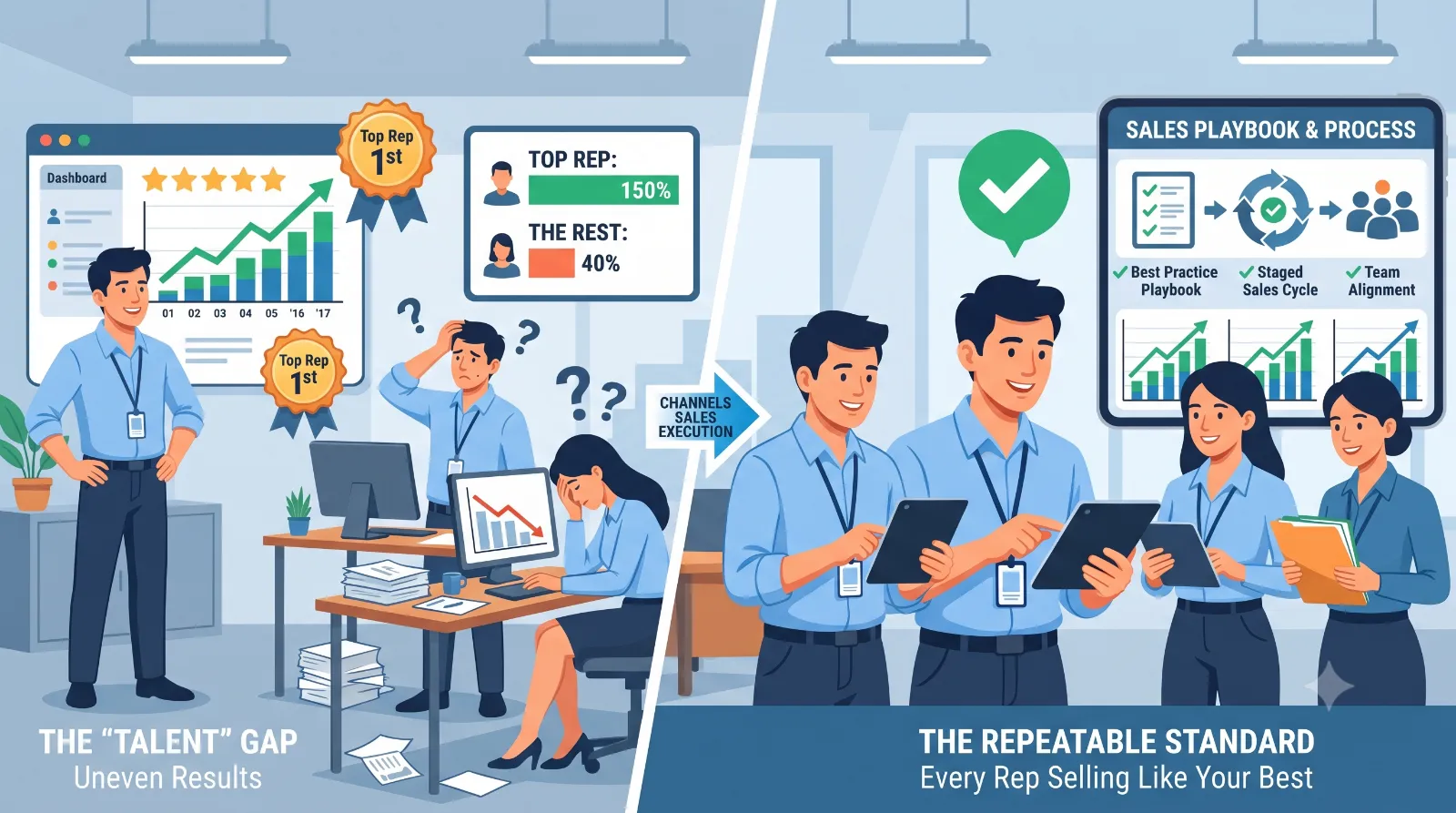
Can Every Rep Sell Like Your Best Rep?
The gap between your best rep and the rest often looks like a talent problem, but it’s usually a process gap. Channel Sales Execution turns your best rep’s way of selling into a repeatable standard for every rep.
Read more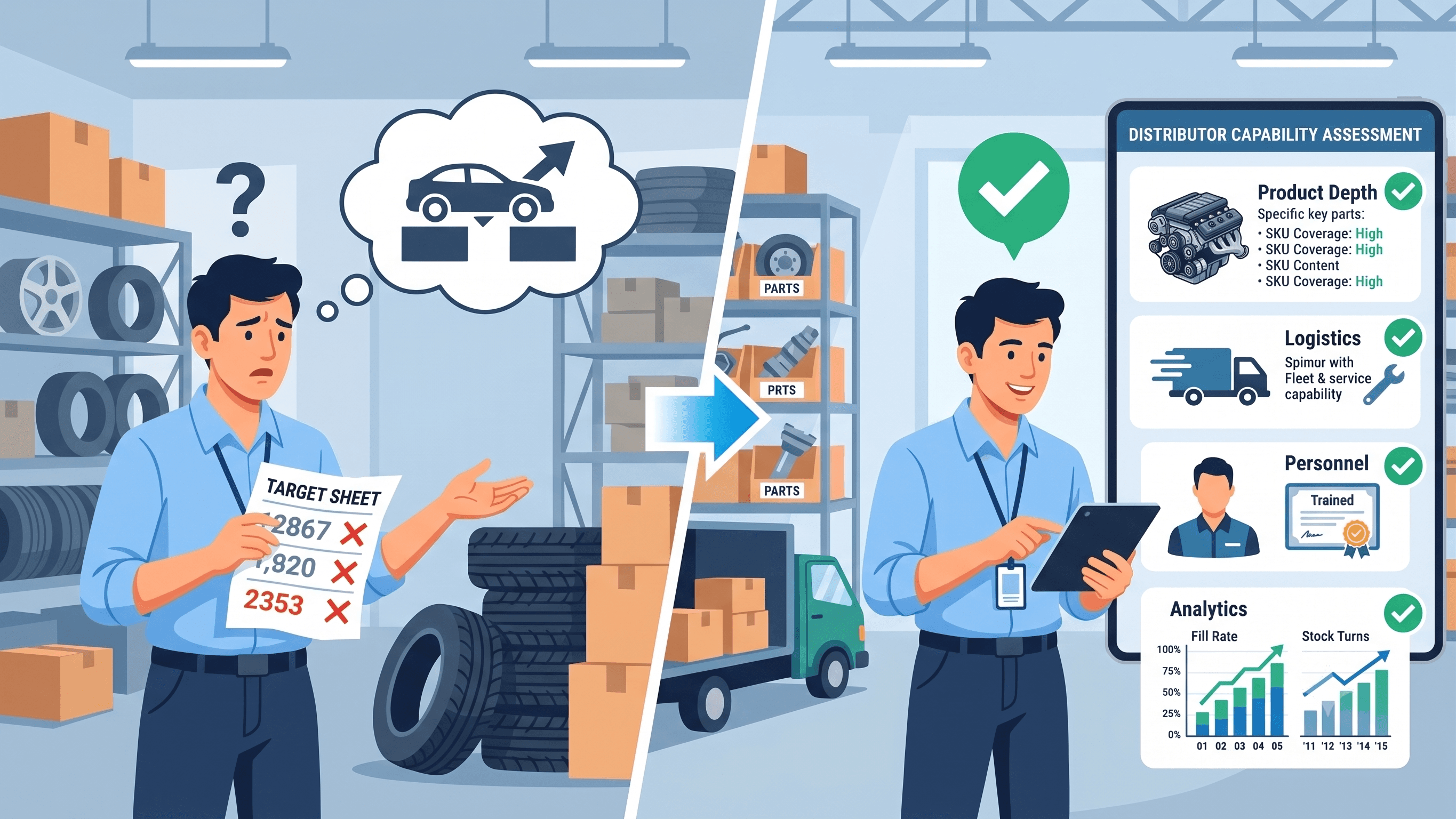
Why Automotive Aftermarket Leaders Are Rethinking Distributor Planning
Growth in the automotive aftermarket is constrained by distributor capability, not demand. Why leading manufacturers now start the planning cycle with a capability assessment instead of a target sheet.
Read moreSee how iSteer fits your sales and distribution channel.
Schedule a personalized demo with one of our product experts.